31 October 2017
Irka Darojat is an MSc Accounting and Finance student at the University of Edinburgh Business School who recently went on a Career Trek to the Royal Botanic Gardens Edinburgh.
A short visit to the Royal Botanic Garden was managed by MSc Accounting and Finance, The University of Edinburgh. MSc students had an excellent opportunity to see the collection of plants, the laboratory and also the education room for kids to study about plants. The most attractive thing is the connection between Royal Botanic Garden (RBGE), Public Service owned by Scottish Government and its Management Accounting. The following table is the details of our visit schedule and the accompanying expert from RBGE. The session was run around half day on Friday. Thanks to Sebastian Hoffman, Stella Wang, Kelly De Wet, Alasdair Macnab for this event.
Programme for Visit
Royal Botanic Garden Edinburgh, 29 September 2017
| Time | Group | Location | Staff |
|---|---|---|---|
| 13:30–13:30 | All | Lecture Theatre - Introduction | Dr Alasdair Macnab |
| 13:45–14:15 | A | Visit to Herbarium | Dr David Harris |
| B | Visit to Living Collection (Research Houses) | Mr David Knott | |
| C | Visit to Botanic Cottage - Community Education/Public Engagement | TBC (Fiona Parker) | |
| 13:30–13:30 | All | Lecture Theatre - Introduction | Dr Alasdair Macnab |
| 14:30–15:00 | C | Visit to Herbarium | Dr David Harris |
| A | Visit to Living Collection (Research Houses) | Mr David Knott | |
| B | Visit to Botanic Cottage - Community Education/Public Engagement | TBC (Fiona Parker) | |
| 13:30–13:30 | All | Lecture Theatre - Introduction | Dr Alasdair Macnab |
| 15:15–15:45 | B | Visit to Herbarium | Dr David Harris |
| C | Visit to Living Collection (Research Houses) | Mr David Knott | |
| A | Visit to Botanic Cottage - Community Education/Public Engagement | TBC (Fiona Parker) | |
| 16:00–17:00 | All | Presentation/Discussion | Dr Alasdair Macnab |
The staff shared a breakdown of the Botanic Gardens' mission, which will be transformed into different cost allocations. This cost allocation for each department running the operation of the Gardens was also shown to students.
A Unique Management Accounting system is used in order to fund the operational of RBGE because it is a non-profit organisation. It is important to know how they fund it and how they are responsible with financial reports to government. The Gardens state they continue to use it because it provides a means of allocating resources and budgetary responsibility to cost centre managers; cost centres reflect the hierarchical divisional structure that exists at RGBE.
Several posters attached to the wall of corridors in one of RBGE building's educate the visitors about the elements of plants that grows in every corner of the world. One of the ways to preserve and present to visitors is by drying all the seeds and plants and putting it in a storefront.
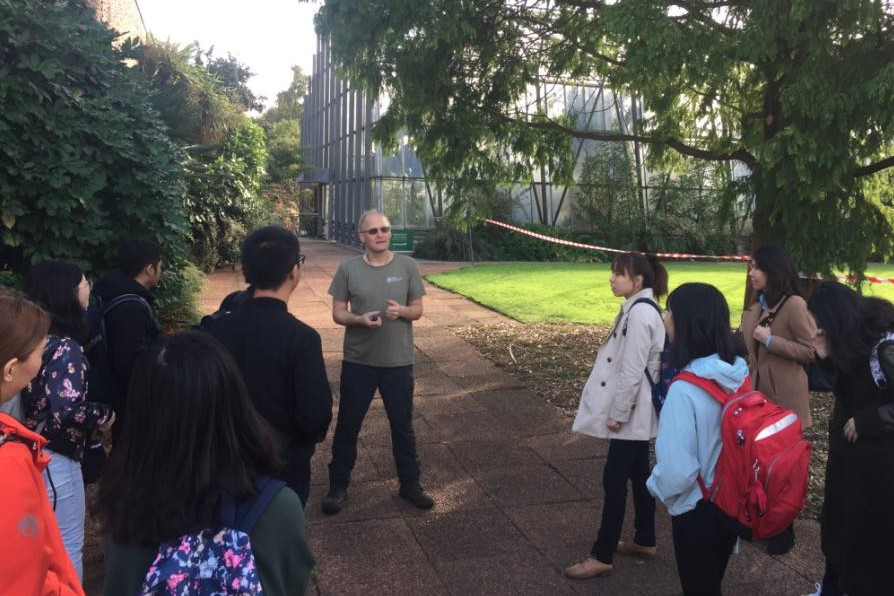
Dr Harris, RBGE researcher, explained about the Herbarium. It stored all the plants from around the world. The temperature inside the green house is adjusted to the place where the plants originated from. The purpose of collecting plants from around the world is preserving the existence of plants in the world, because nowadays weather and conditions change dynamically. In order to prevent the extinction of certain types of plants, RBGE save them. Before it goes to the Herbarium, there is research on a plant's DNA to ensure its originality and species. The herbarium is built with a transparent glass roof in order for the plants get the sunlight as plants use photosynthesis.
The MSc students were divided into three groups to follow Dr Harris to see around all the plantations inside the herbarium. He explained some plants very well to us. He also shared a story on when he did research on plants in China for about 17 years and brought some of the plants to this Herbarium. Before we entered the herbarium area, we had to step on a special carpet with chemical fluid in order to sterilises our shoes. It prevents the possibility of infecting plants with viruses brought by humans.
Several rooms are specially designed to educate kids or students for the plants. The objective is let them know where food originally comes from and how it grows and is produced until finally they can eat them. This is the basic information that can boost their innovation in the future.
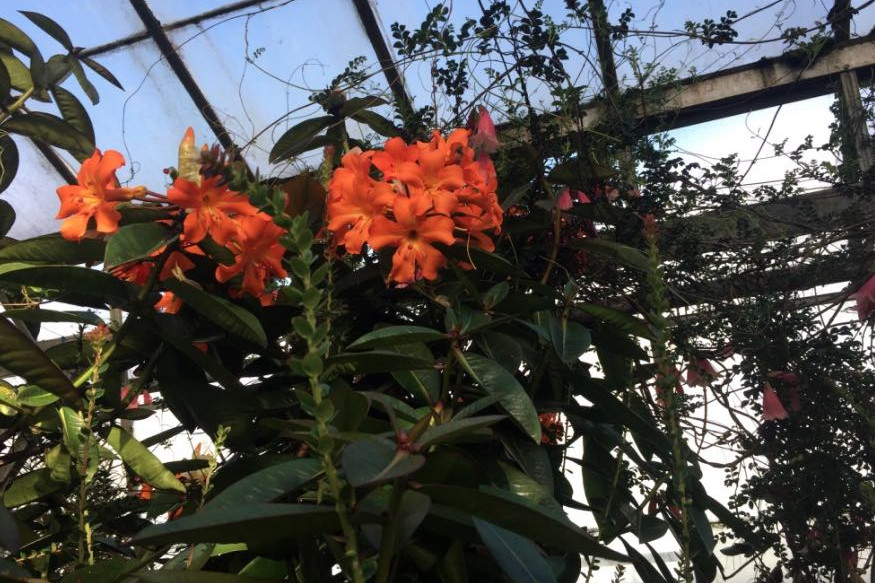
Some plants have been imported from far away in Papua New Guinea, the country bordered with Papua Irian Jaya, one of the provinces under Government of Indonesia. Others are imported from South America, around Mexico, Argentina and Chile, or Asia, as a result of which the temperature in the Herbarium has to be set to warm and humid. Another plant, Rhododendron polyanthemum, is from Borneo, an island in Indonesia where there are wide forests. Another group came from the mountainous areas in Malaysia.
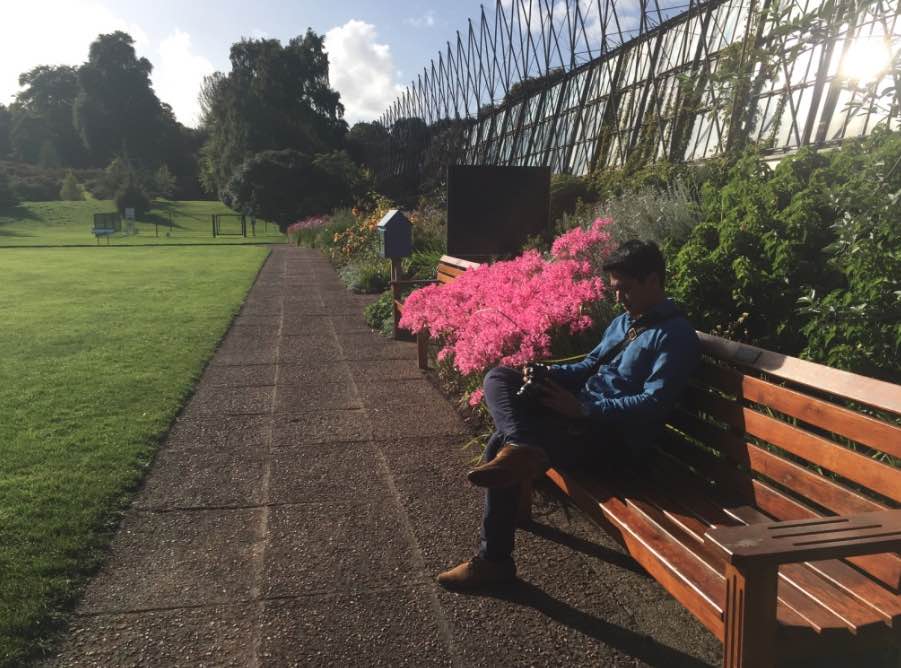
It was also really nice to take a seat in front of the Herbarium and read something. If there had been a Coffee Shop in RBGE, this would have been perfect.
Irka Darojat, MSc Accounting and Finance